
What Long Days at a Desk Do to Your Body, and How Pilates Can Help
If you live or work on the Eastside, there's a good chance much of your day happens at a desk. It might be an office in Bellevue, a home office in Redmond, or a kitchen table that became a workspace and stayed that way. Either way, the pattern is familiar: back-to-back meetings, long stretches of focused screen time, and not much movement until the laptop finally closes.

By the end of the day, many people stand up feeling stiff. The shoulders have crept up, the hips feel tight, and the body feels a little less like yours than it did that morning. Usually, that's your body asking to move after many hours in one position.
What We Hear From Desk Workers at the Studio
Sitting isn't bad on its own. The challenge is sitting for long stretches with little change in position. Many of the clients who walk into our Redmond studio describe the same things:
Tension in the neck and shoulders. Leaning toward a screen for hours often leaves the upper back and shoulders tired.
Tight hips. Spending most of the day seated can make the front of the hips feel tight when you stand or walk.
Less movement overall. When work runs long, and especially when you work from home with no commute, movement can quietly drop out of the day.
Feeling disconnected from your body. When your attention is on a screen all day, it's easy to stop noticing how you're holding yourself or breathing.
Why "Just Sit Up Straight" Rarely Sticks
Many people try to fix desk stiffness by pulling their shoulders back and sitting tall. That feels good for a moment, but holding one position through effort is tiring, and most of us drift back as soon as the next email arrives.
What tends to help more is building strength, mobility, and body awareness, so your body has more options throughout the day.
The Role of Breath
On a busy workday, breathing often becomes shallow without us noticing. In Pilates, breath is part of every exercise, and many clients find they bring that calmer, steadier breathing back to their desk.
How Pilates Can Help
Pilates brings movement back to the areas that tend to feel stuck and builds strength in a mindful, controlled way. A regular practice can support:
Mobility. Moving the spine, hips, and shoulders through a full range of motion.
Strength. Building strength through the whole body, including the core, so you feel more supported in everyday movement.
Control. Precise movement builds coordination and body awareness.
Variety. Different equipment and different positions give your body the variety a desk day lacks.
The equipment matters here. The Reformer's adjustable springs can make a movement more supportive or more challenging, depending on what your body needs that day. Wall Units offer great ways to explore upper back and shoulder mobility, which is often exactly what desk workers are missing. The Chair builds strength, balance, and control, including on one leg.
Consistency is where the change happens. Clients who come once or twice a week find that movements that felt new at first start to feel natural, and that carries over into how they feel at work.
Why Small Classes Matter
The same exercise can look very different from one body to the next. Someone who spends ten hours a day at a laptop may need a different setup, a different spring, or a different cue than the person on the next Reformer. That's why personal attention is at the heart of how we teach.
Classes are capped at five. With so few people in the room, your instructor can watch how you're moving throughout the whole session, not just at the start.
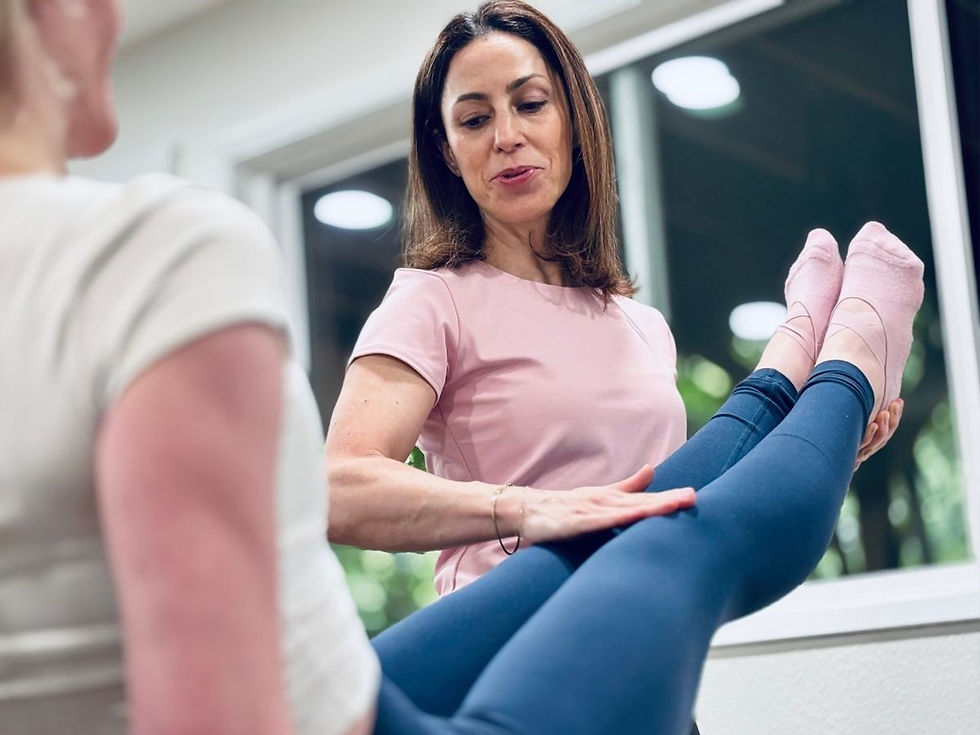
Hands-on corrections. Our instructors guide you with gentle, hands-on cues, so you can feel what a movement should feel like instead of guessing.
Exercises adjusted for you. If something doesn't feel right for your body, your instructor adapts it in the moment.
Instructors who know your goals. In a small studio, your instructor learns what you're working toward and follows your progress over time, so each class builds on the last.
A background in clinical rehabilitation. Balance Pilates was founded by a physiotherapist with many years of clinical rehabilitation experience.
Your First Step: The Intro Package
The best way to start is with our $150 Intro Package, which includes one private session plus two small-group classes at our Redmond studio.
Your private session is where you learn the equipment, the Pilates principles, and what works best for your body. Your instructor gets to know your daily routine and your goals, so by the time you join a small-group class, you already feel comfortable in the studio and your instructor already knows you.
If long days at a desk have left you feeling stiff, tense, or disconnected from your body, Pilates can help you feel at home in it again.
Book your Intro Package at https://www.yapilates.com/pilates-introductory-offer and move with intention, precision, and purpose from the very first session.


Comments